Nursery sleep guide
How to Evaluate an Organic Crib Mattress for Your Nursery
The label may say organic. The decision still begins with the basics: a mattress designed for the crib, a snug fit, and a firm, flat surface. Materials and certifications can help you compare options, but they do not replace safe-sleep guidance.
Published November 3, 2026
Preparing a nursery can turn small choices into consequential ones. A crib mattress is one of them. It needs to fit the crib securely, hold its shape, and be simple to keep clean. For families seeking an organic crib mattress, there is another layer to assess: what “organic” refers to, which parts of the mattress are covered by a certification, and whether the product’s care requirements work in everyday life.
The clearest way to evaluate an option is to separate essential safety considerations from material preferences. Fit and firmness come first. Then look at construction, documentation, cleaning instructions, and practical details such as mattress height and replacement parts. Organic materials may matter to a family’s values or preferences, but the word itself is not a safety rating—and it cannot make an unsuitable sleep surface appropriate for an infant.
Begin with fit: mattress and crib must work together
A crib mattress should be made for the specific crib or play yard in which it will be used, and it should fit snugly inside that sleep space. Gaps around the perimeter can create a hazard. Do not rely on a general claim that a mattress is “standard size”; check the crib manufacturer’s instructions, mattress specifications, and applicable consumer-safety guidance for your country.
Before buying, confirm the following details:
- The mattress is intended for the exact crib model or type, including whether it is a full-size crib, mini crib, or another product.
- The stated length, width, and thickness match the crib’s requirements and the manufacturer’s instructions.
- The mattress sits evenly on the support platform without bowing, bunching, or lifting at the edges.
- The crib’s hardware and mattress-support settings are assembled and used as directed.
- The product information clearly identifies the manufacturer, model, and relevant safety or compliance details.
Check the fit again after assembling the crib, rather than assuming that a label or measurement alone settles the question. Place the mattress in the crib and inspect the perimeter. It should not leave a substantial opening between the mattress and the sides. If the fit seems questionable, consult the crib and mattress manufacturers before use. Do not fill a gap with towels, foam, rolled blankets, or another improvised insert.
Firm and flat is a functional requirement
For an infant, a sleep surface should be firm and flat, with a fitted sheet designed for that mattress. A surface that feels plush to an adult may not be appropriate for a baby. Avoid using toppers, quilts, pillows, comforters, positioners, or other soft objects in the crib. A mattress pad should be used only if the crib and mattress manufacturers permit it and the pad fits securely without changing the surface or creating loose material.
Firmness is not a marketing contest. It is a property of the sleep surface and should be assessed according to current pediatric safe-sleep guidance and the product’s instructions—not by adding a soft layer to make a mattress feel more comfortable. Do not modify the mattress or cover, and do not use a product that is damaged, sagging, or no longer fits correctly.
Safe-sleep advice can change as evidence and public-health recommendations are reviewed. Follow current guidance from your national health authority and your child’s clinician. In the United States, families can consult the American Academy of Pediatrics and the Consumer Product Safety Commission for current recommendations and product-safety information. In other countries, use the relevant local authorities. A mattress retailer’s description is not a substitute for those sources.
What “organic” does—and does not—tell you
“Organic” may refer to a particular textile, a fiber’s agricultural production, or a broader set of manufacturing requirements. It does not necessarily mean every material inside a mattress is organic. A cover could be certified while the core contains other materials; a mattress may use natural fibers alongside foam, springs, adhesives, or barrier components. The exact construction varies, so read the product’s materials list and certification documentation rather than treating a single word as a complete description.
Ask which components are included in the claim: the cover, batting, fill, core, or all of them. Look for a clear breakdown of materials and, where relevant, the names of the organizations that verified them. If the manufacturer uses terms such as “natural,” “non-toxic,” or “chemical-free,” seek precise explanations. Such phrases can be broad or undefined, and no mattress should be assumed to contain no chemicals at all.
A detailed manufacturer page should make it possible to distinguish verified information from promotional language. Useful details include material names, where a certification applies, care limitations, product dimensions, and contact information for questions. If essential facts are missing, ask the manufacturer directly. Keep the reply or product documentation with your purchase records.
Read certifications by scope, not by logo
Third-party certifications can make comparison more concrete, but their meaning depends on the standard, the product, and the component being certified. A textile certification may address the fabric or fiber supply chain without evaluating every part of the mattress. A chemical-emissions program, for example, addresses a different question from an agricultural or textile standard. One mark should not be taken as proof of every safety, environmental, or performance claim.
When you encounter a certification, check the organization’s own directory or documentation. Confirm that the manufacturer and product are covered, that the certificate is current, and that its scope matches the claim being made. A logo on a product page is a starting point for verification, not the verification itself. If a certificate applies only to a fabric, it should not be read as certification of the complete mattress.
Also distinguish a materials certification from compliance with mandatory product rules. A mattress may have an organic textile certification and still need to meet the safety requirements that apply in its market. Conversely, compliance with applicable regulations does not necessarily mean that the product is organic. These are separate questions; evaluate each on its own terms.
Understand the layers inside the mattress
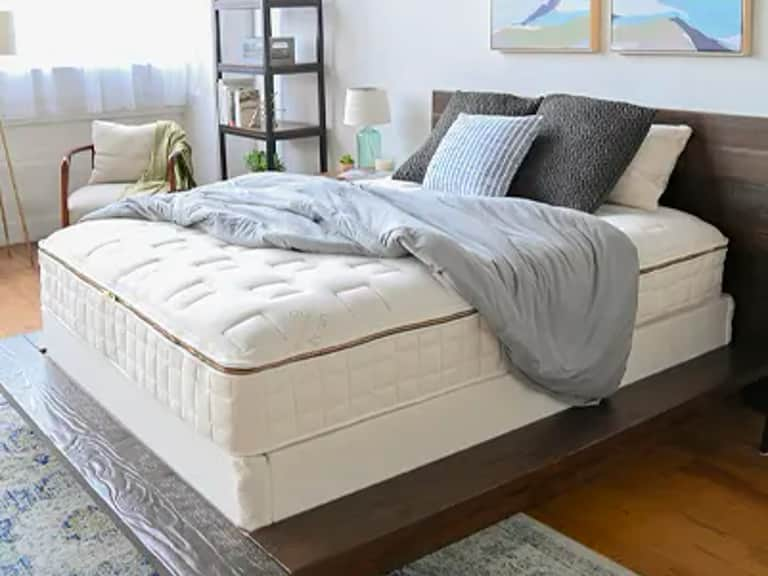
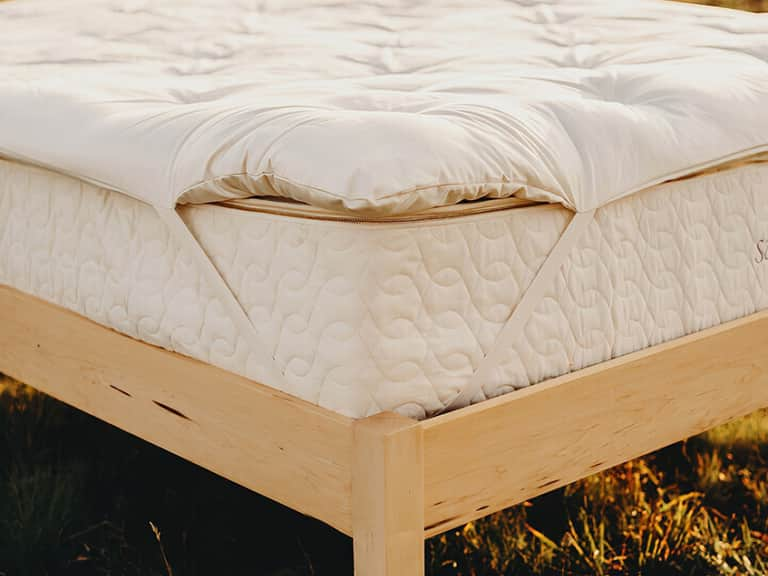
A crib mattress is often described as a simple object, but its construction can involve several layers. The cover protects the core and affects cleaning. The core provides the structure and firmness. Padding or batting may sit between them, while a waterproof barrier can be built into the cover or added as a separate component. Each layer can affect care, durability, and the materials a family is choosing.
Commonly discussed materials include cotton, wool, latex, foam, and metal springs. Names alone do not tell you how a product will perform. Ask how the material is used, whether it is part of the cover or core, and what the manufacturer says about firmness, cleaning, and wear. A “natural” fill does not make a mattress suitable if it is too soft, poorly fitting, or difficult to keep in the condition required by its instructions.
Construction also matters when a mattress has multiple stages, a reversible design, or a dual firmness specification. Follow the manufacturer’s instructions about which side is intended for an infant and how to identify it. Do not guess based on feel alone. If the label or guidance is unclear, contact the manufacturer before use.
Make care part of the buying decision
A nursery mattress has to work beyond the first night. Spit-up, diaper leaks, and routine household dust make care instructions important. Check whether the cover is removable, whether it can be washed, and what cleaning agents or temperatures are permitted. Some mattresses allow only spot cleaning; others have a washable cover. Never assume that the core can be soaked or machine-washed.
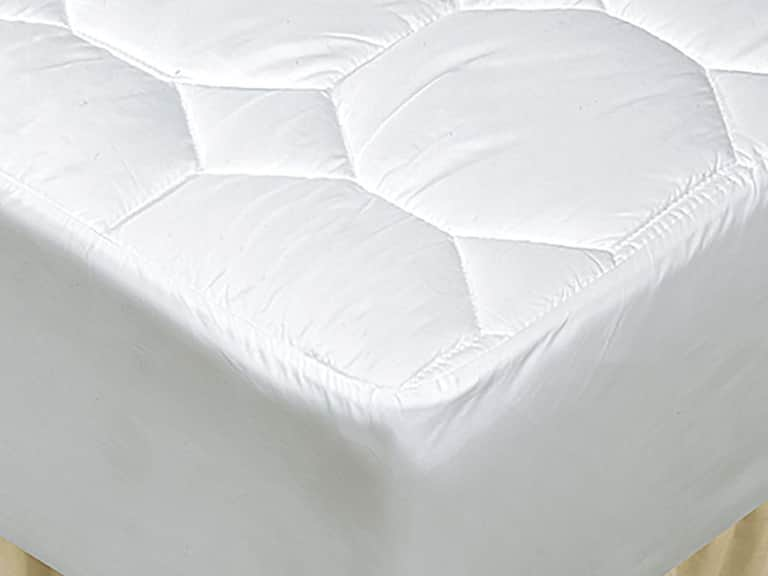
If the mattress includes a waterproof surface or barrier, find out whether it is integrated or sold separately. Any fitted cover or protector should be designed for the mattress and should remain taut and secure. Do not stack layers in a way that makes the sleep surface loose, uneven, or softer than intended. Follow both the mattress and crib makers’ instructions when they differ, and seek clarification rather than improvising.
For a used mattress, inspect carefully before considering it. It should be clean, dry, structurally sound, and an exact fit for the crib. Avoid one that is torn, sagging, damaged, heavily stained, or of uncertain history. Check recalls and current safety guidance for the model. A low price or an organic label cannot make a worn or unsuitable mattress a sensible choice.
A practical comparison checklist
When comparing two or more organic crib mattress options, use the same questions for each. A short, consistent checklist helps prevent appealing design language from obscuring the essentials.
- Fit: Is it explicitly compatible with the crib, and do the dimensions meet the crib manufacturer’s requirements?
- Surface: Is the sleep surface firm and flat, as required by current safe-sleep guidance?
- Materials: Are the cover, core, and other layers described clearly?
- Certification: Which independent organization certifies which component, and can the claim be verified?
- Compliance: Does the manufacturer identify the applicable product-safety requirements for your market?
- Care: Are washing, spot-cleaning, drying, and protector instructions practical for your household?
- Durability: Are there clear directions for inspection, use, and replacement if the mattress becomes damaged?
- Support: Can you contact the manufacturer with questions about fit, materials, or a model-specific concern?
A nursery is a system, not just a mattress
Even a carefully selected mattress is only one part of an infant’s sleep environment. Use the crib or other approved sleep space as directed, and keep the sleep area clear of loose bedding and soft objects. Place the baby on their back for sleep and follow current local safe-sleep recommendations. Temperature, clothing, and room setup should be managed using reliable public-health advice, not product claims about a mattress’s ability to prevent overheating or improve sleep.
The safest choice is not necessarily the one with the longest list of materials or the most prominent badges. It is the one that fits the designated crib, provides the required firm, flat surface, has understandable and verifiable product information, and can be maintained as instructed. Organic materials may be an important preference; they are one part of the evaluation rather than the deciding safety standard.
Frequently asked questions
Does an organic crib mattress automatically make a crib safer?
No. Organic describes a materials or production claim, depending on the product and certification. It does not establish that the mattress fits the crib, is firm and flat, or meets every applicable safety requirement. Evaluate those issues separately.
Can I add a soft mattress pad for comfort?
Do not add a topper or soft layer to make an infant’s sleep surface more comfortable. Use only a fitted sheet and any accessory specifically permitted by the crib and mattress manufacturers, while following current safe-sleep guidance. Avoid loose or ill-fitting layers.
Are all certifications equivalent?
No. Certifications differ in purpose and scope. Verify what the certification covers, whether it applies to the specific product, and whether the certificate is current. A certification for one textile does not necessarily cover the entire mattress.
What should I do if I am unsure about fit?
Do not use the mattress until the question is resolved. Recheck the crib’s instructions and the product dimensions, then contact the crib or mattress manufacturer. Never fill a gap with an improvised object.
The decision, in plain terms
To evaluate an organic crib mattress, begin with compatibility and fit; confirm a firm, flat surface; then investigate materials, certification scope, cleaning, and manufacturer support. Make sure product claims are specific enough to verify. Keep current pediatric safe-sleep guidance at the center of the decision, and treat organic content as a preference—not a substitute for the basics.
A good nursery choice does not need extravagant language. It needs clear documentation, dependable fit, practical care instructions, and a sleep setup that follows authoritative guidance. When those essentials are in place, families can make a more informed choice about the materials they want in the room where their child will sleep.